4 February, 2026
Key Business Outlook for 2026
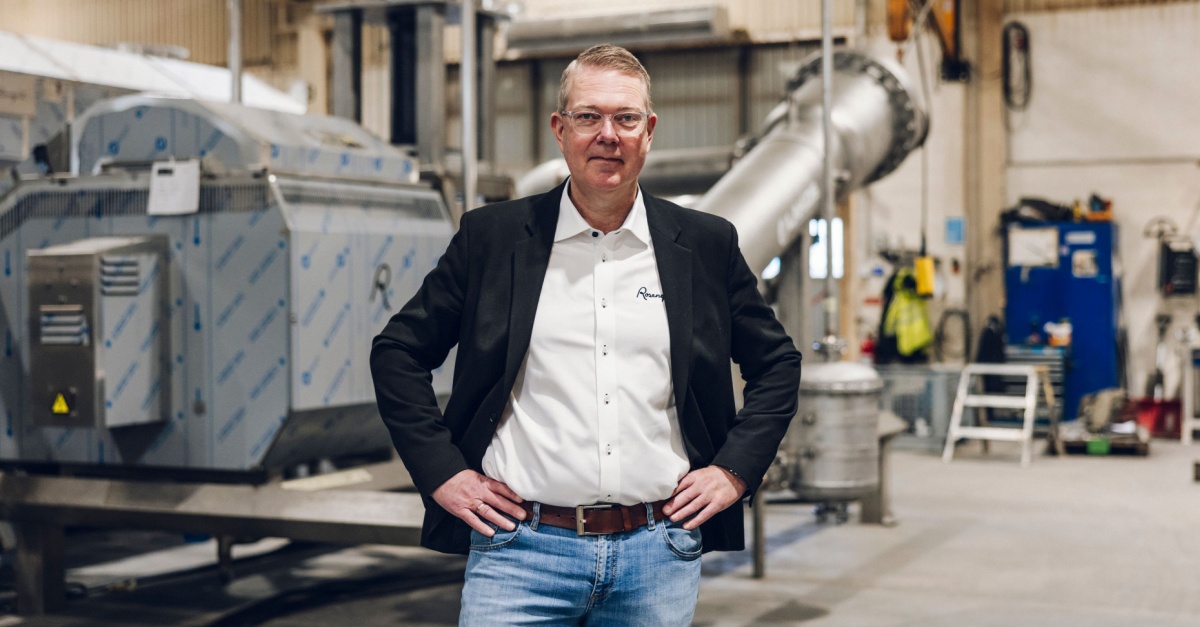
Managing Director Stefan Björk highlights how Rosenqvists Food Technologies is helping processors boost efficiency, reduce resource use, and meet growing global demand for potato products.
From lower total cost of ownership to smarter automation and long‑term innovation in energy recovery and AI — the focus is clear: every production hour and every input resource matters.
A great snapshot of where our industry is heading in 2026 and beyond. You find it all in Potato Business 1/2026. Thanks to Tudor Vintiloiu at Potato Business for listening to our view of the industry.
Interview by Tudor Vintiloiu – Editor in Chief at Potato Business – Answers given by Stefan Björk – Managing Director of Rosenqvists Food Technologies
Looking back at 2025, which customer pressures proved structural rather than temporary, and how did they reshape your commercial or product strategy?
We see clearly that clients value and expect efficiency, more than ever before. For us at Rosenqvists Food Technologies this means offering lowest total cost of ownership. The goal to produce more with fewer resources is at the heart of everything we do.
Solid machines and smart design might have been good enough a decade ago. Today, more than ever, we need to back this up with increased potato yield, reducing consumption of water, energy, oil, coating mix and seasoning, minimizing operator requirements, and extending production hours by avoiding downtime.
As you plan for 2026, which market assumptions are you revising, and where do you see the greatest hesitation or uncertainty among your customers?
Luckily, the markets for potato chips and frozen potato products are growing steadily year after year. The products are popular and gain attraction in more countries around the world. This underlining factor helps our clients to grow which consequently offer us more projects to work with. We are adapting towards a further diversified geographical spread for our customers.
Where did your strongest growth opportunities come from recently, and what did those projects reveal about changing customer priorities?
Some of the biggest projects we have worked with recently supports international expansion for large key accounts. They work with a strategic choice for geographical diversification of setting up more production sites all over the world and Rosenqvists Food Technologies work hard to support their efforts.
How do you balance near-term customer demands with longer-term R&D investment, especially in a more cautious capital-spending environment?
Design is optimized for every single project at Rosenqvists Food Technologies. Whatever we can do to minimize waste and use fewer input resources is implemented in collaboration with our clients. Apart from this, we drive long-term R&D efforts for recovering energy in the chips line, AI utilization in automation and improve the solutions for thermal treatment.
From your perspective, which policy or regulatory developments would most support long-term technology investment in the potato processing sector?
The European Parliament, Council, and Commission have agreed on legislation for new genomic technologies (NGT), paving the way for innovations like Crispr/Cas9 to boost crop resilience, reduce chemical use and support sustainable production. What could this mean for potato processing? Could it unlock opportunities for bruise-resistance, lower levels of glycoalkaloids, or reduce acrylamide? We’re excited to explore the possibilities.
What is your five-year vision for processing technology in the potato sector, and how does your company plan to remain relevant as customer expectations mature?
Offering the lowest total cost of ownership is our goal at Rosenqvists Food Technologies. We believe strongly that our process know-how can serve as a key factor for our clients to reach this goal. We will continue to innovate stronger designs for thermal treatment and automate based on key data. Every production hour counts, and every input resource needs to be utilized fully. During the coming five years, the expectation for efficient processing will be the game changer for a profitable producer of potato products and snacks.