Sustainable co-creation in potato processing – a case study
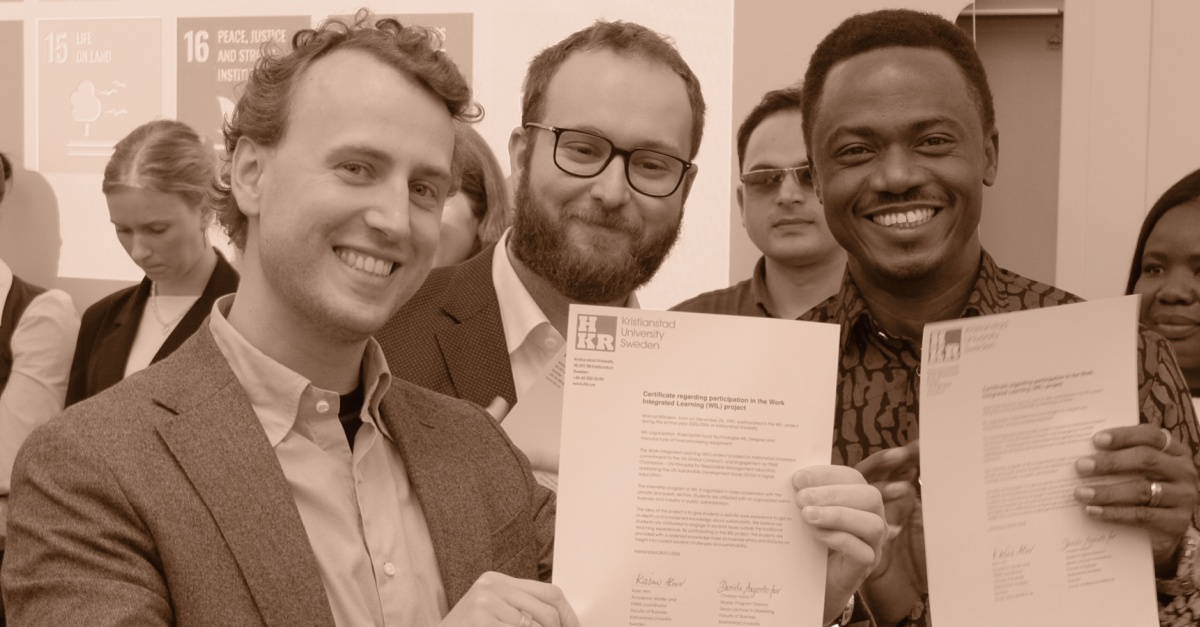
At Kristianstad University’s Sustainability Day on January 28, 2026, master’s students Marcus Månsson, Marco Ferrari, and Albert Baah Essuman presented their case study of Rosenqvists Food Technologies.
The study, Sustainable value co-creation in the B2B potato-processing industry: a case study of Rosenqvists Food Technologies, highlights Rosenqvists’ position as a key partner in driving sustainable and efficient food processing, with clear contributions to the UN Sustainable Development Goals SDG 9 (Industry, Innovation & Infrastructure) and SDG 17 (Partnerships for the Goals).
Their conclusions emphasize the need to further strengthen internal and external communication—especially with clients—to accelerate sustainability impact and ensure that technological innovations translate into measurable improvements.
In a follow‑up interview, the students supported Rosenqvists by addressing three strategic questions central to our future roadmap:
Which sustainability arguments are most relevant for our clients?
What could the payback time be for investments in sustainability?
What developments can we expect over the next five years?
Their insights provide a forward-looking perspective on how sustainability expectations, technology adoption, regulatory pressures, and client priorities are likely to evolve. This creates a valuable foundation for Rosenqvists’ continued role as an innovation leader and trusted sustainability partner in the global food processing sector.
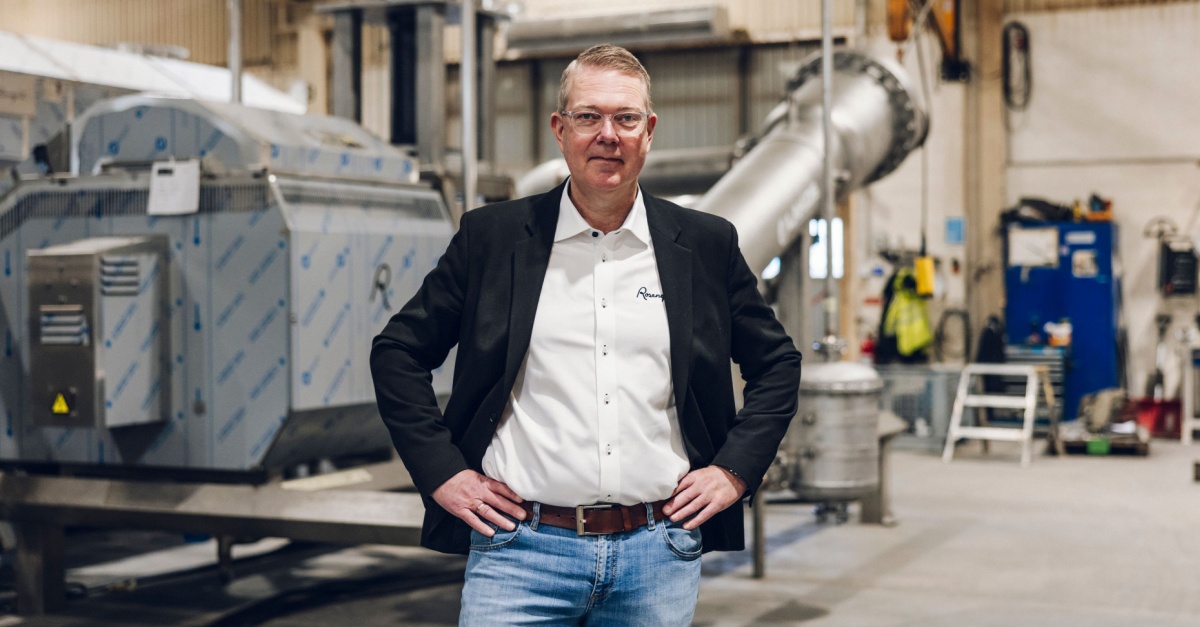
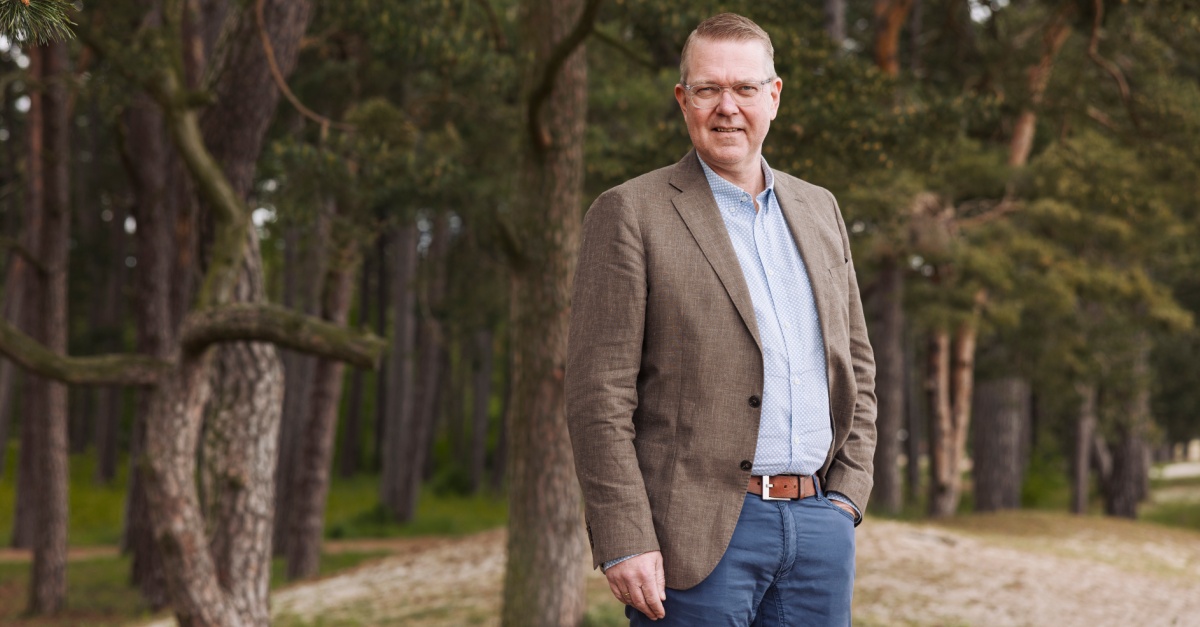
Managing Director Stefan Björk highlights how Rosenqvists Food Technologies is helping processors boost efficiency, reduce resource use, and meet growing global demand for potato products.
From lower total cost of ownership to smarter automation and long‑term innovation in energy recovery and AI — the focus is clear: every production hour and every input resource matters.
A great snapshot of where our industry is heading in 2026 and beyond. You find it all in Potato Business 1/2026. Thanks to Tudor Vintiloiu at Potato Business for listening to our view of the industry.
Interview by Tudor Vintiloiu – Editor in Chief at Potato Business – Answers given by Stefan Björk – Managing Director of Rosenqvists Food Technologies
Looking back at 2025, which customer pressures proved structural rather than temporary, and how did they reshape your commercial or product strategy?
We see clearly that clients value and expect efficiency, more than ever before. For us at Rosenqvists Food Technologies this means offering lowest total cost of ownership. The goal to produce more with fewer resources is at the heart of everything we do.
Solid machines and smart design might have been good enough a decade ago. Today, more than ever, we need to back this up with increased potato yield, reducing consumption of water, energy, oil, coating mix and seasoning, minimizing operator requirements, and extending production hours by avoiding downtime.
As you plan for 2026, which market assumptions are you revising, and where do you see the greatest hesitation or uncertainty among your customers?
Luckily, the markets for potato chips and frozen potato products are growing steadily year after year. The products are popular and gain attraction in more countries around the world. This underlining factor helps our clients to grow which consequently offer us more projects to work with. We are adapting towards a further diversified geographical spread for our customers.
Where did your strongest growth opportunities come from recently, and what did those projects reveal about changing customer priorities?
Some of the biggest projects we have worked with recently supports international expansion for large key accounts. They work with a strategic choice for geographical diversification of setting up more production sites all over the world and Rosenqvists Food Technologies work hard to support their efforts.
How do you balance near-term customer demands with longer-term R&D investment, especially in a more cautious capital-spending environment?
Design is optimized for every single project at Rosenqvists Food Technologies. Whatever we can do to minimize waste and use fewer input resources is implemented in collaboration with our clients. Apart from this, we drive long-term R&D efforts for recovering energy in the chips line, AI utilization in automation and improve the solutions for thermal treatment.
From your perspective, which policy or regulatory developments would most support long-term technology investment in the potato processing sector?
The European Parliament, Council, and Commission have agreed on legislation for new genomic technologies (NGT), paving the way for innovations like Crispr/Cas9 to boost crop resilience, reduce chemical use and support sustainable production. What could this mean for potato processing? Could it unlock opportunities for bruise-resistance, lower levels of glycoalkaloids, or reduce acrylamide? We’re excited to explore the possibilities.
What is your five-year vision for processing technology in the potato sector, and how does your company plan to remain relevant as customer expectations mature?
Offering the lowest total cost of ownership is our goal at Rosenqvists Food Technologies. We believe strongly that our process know-how can serve as a key factor for our clients to reach this goal. We will continue to innovate stronger designs for thermal treatment and automate based on key data. Every production hour counts, and every input resource needs to be utilized fully. During the coming five years, the expectation for efficient processing will be the game changer for a profitable producer of potato products and snacks.
Latest news
13 February, 2026
Sustainable co-creation in potato processing – a case study
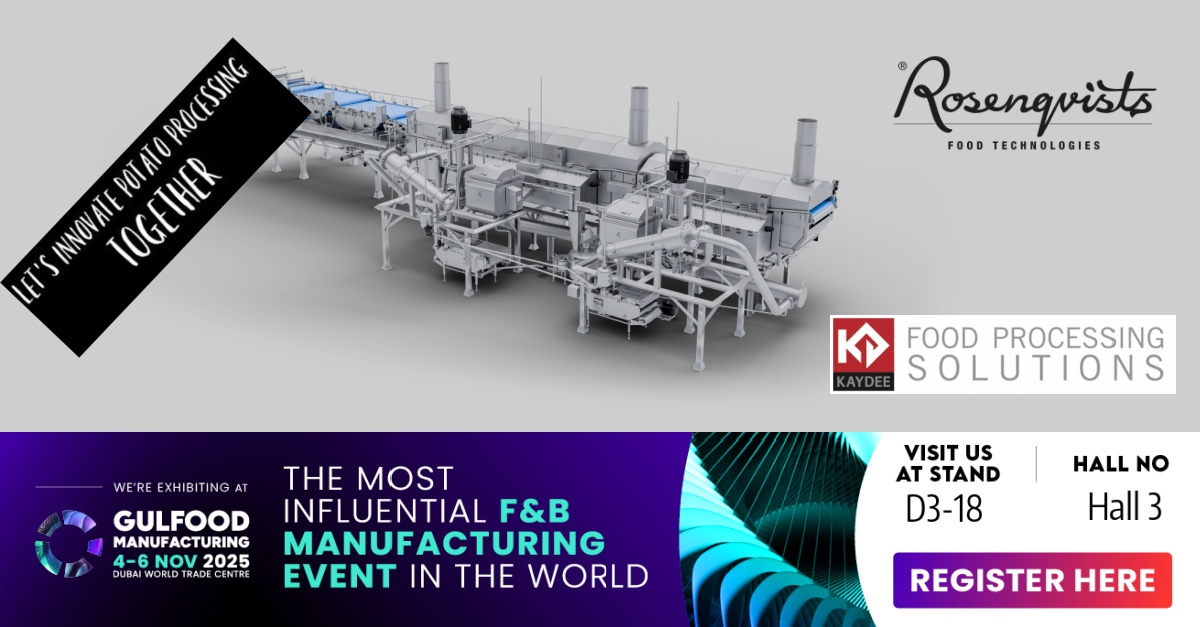
Come see Rosenqvists Food Technologies at Gulfood Manufacturing
Discover cutting-edge solutions for processing french fries, hash browns, potato chips, snacks, and nuts. Whether you’re scaling up production or planning for a new plant, our technologies are designed to elevate your efficiency and product excellence.
Visit us at Hall 3, Stand D3-18 – Let’s innovate potato processing together!
Booth is hosted by our local partner Kaydee Food Processing Solutions. Kamel Hamade and Martin Avander will be representing Rosenqvists Food Technologies at Dubai World Trade Centre on November 4-6.
We are proud to deliver more than ever before, mastering the art of frying hash browns, summing up benefits with the new drying system and a teaser for some great updates to our batch peeler. Everything for improved processing of potato. We do it together with our clients.
Back in 2003, Rosenqvists Food Technologies revolutionized chip frying with the introduction of the Cold Adjustment Temperature Zone (CATZ). This innovative feature cools the oil in the final zone of the multi-zone fryer—an effective way to reduce acrylamide formation and make your chips safer.
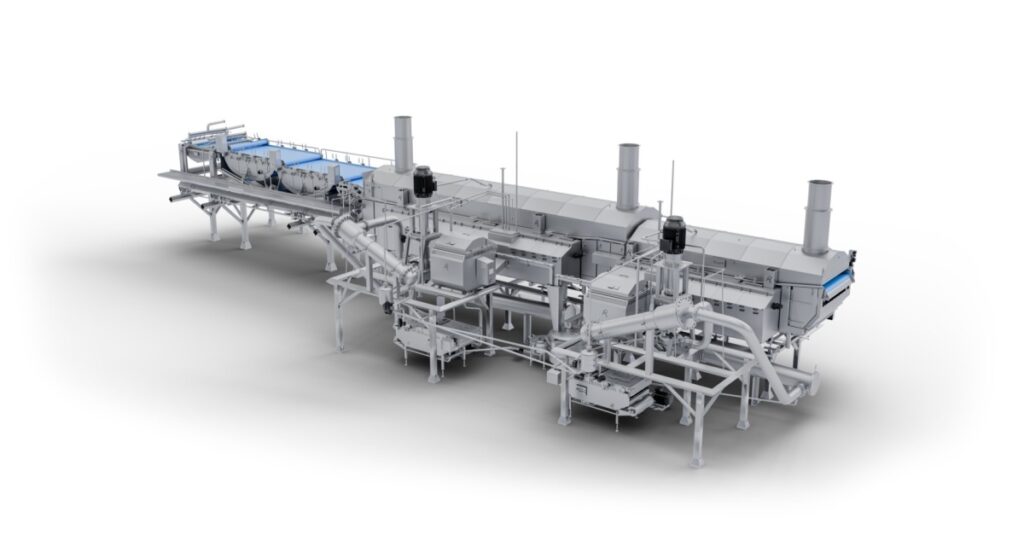
The multi-zone chips fryer gives you unmatched control over temperature and oil flow, allowing you to fine-tune texture. Whether you’re aiming for crispy, crunchy, or something in between, this fryer helps you craft chips with distinct characteristics.
Cut Energy Costs by Reducing Surface Water on Chip Slices
Did you know that excess surface water on chip slices can significantly increase your energy consumption during frying?
After washing, dipping, or blanching, chip slices retain surface moisture that must be evaporated in the fryer—along with the natural moisture inside each slice. This evaporation process consumes a lot of energy. The more surface water present, the more kilowatt-hours (kWh) are needed.
The solution? Minimize surface water before frying. Drying the slices beforehand can lead to substantial energy savings. For example, reducing surface moisture from 12% to 8% can save up to 130 kWh in energy use if you produce 1500 kg of potato chips per hour.
However, it’s important to strike the right balance. A small amount of surface water is still needed to help slices separate and prevent clumping—ensuring a consistent, high-quality product.
You can reduce surface water using:
Vibratory dewatering conveyors
High-speed belts with air blowers
Other customized drying technologies
Need help choosing the right solution for your line? Our sales managers are happy to advise you on the best equipment—and even show you how to measure surface water using a simple centrifugal sieve method.
👉 Let’s optimize your process and cut energy costs—contact us today.
I’m excited to share the latest updates from Rosenqvists Food Technologies!
In this edition, we highlight key insights we’ve gained over the years in coated French fries production. As demands grow for longer production hours and reduced waste, we continue to innovate—step by step—together with our valued clients.
You’ll also read about our recent innovation award, the benefits of our Inspection Service, and meet some of the new talents who’ve joined our team.
As summer approaches here in Northern Europe, we’re enjoying the sunshine—and I wish you all a wonderful and relaxing season ahead.
Here’s what we’ve learned about coating of french fries
Producing clear-coated French fries—or other potato products with thick, heavy coatings—comes with its own set of challenges. At Rosenqvists Food Technologies, we’ve spent years refining our coating systems to help our clients achieve longer production runs with less waste and easier cleaning.
Here are some of the main challenges we’ve tackled:
Keeping machinery clean and hygienic
Preventing excess coating mix from entering the first-stage fryer
Reducing waste of expensive coating mix
Maximizing production uptime
Through continuous innovation, we’ve made significant improvements in both design and performance. Today, some of our clients run their coating lines for several weeks without major interruptions. Here’s what we’ve learned along the way:
1. Easy Access for Cleaning
Clean equipment is essential for food safety and consistent product quality. Our designs focus on accessibility:
Tiltable setting conveyors make cleaning easier during wash cycles
Open-frame construction allows cleaning even during production
Movable fine filters improve access and hygiene
Integrated cleaning systems can include the entire coating mix unit
2. Gentle Handling of the Coating Mix
Maintaining the quality of the coating mix is crucial. We’ve optimized our systems to reduce stress on the mix:
Specialized pumps or screws minimize shear and preserve texture
Cooled drip trays and pressure-resistant systems help maintain temperature stability
Tubular heat exchangers keep the mix cool during circulation
Every drop of coating mix counts. Our systems are designed to reuse and recirculate as much as possible:
Adjustable air blowers remove excess coating before frying
Optimized setting conveyors with the right length and turning points reduce loss
Spray and drip tray systems help recover coating during production
Our goal: Lower Total Cost of Ownership
Every design improvement we make is aimed at reducing operational costs for our clients. By combining long production runs, efficient cleaning with minimal water use, and reduced coating waste, we help food producers achieve a more sustainable and profitable operation.
Rosenqvists Food Technologies at Gulfood Manufacturing
Come see us at Gulfood Manufacturing Nov 5-7 in Dubai. Plans for potato chips, snacks, nuts, french fries and hash browns? We will offer our best advise. You will be able to meet with Kamel Hamade and Fredrik Rönnberg. You will find us in hall 3, stand D3-18 together with our agent KayDee Food Process and Packaging Solutions
Our team is back from Snackex in Stockholm, full of inspiration and energy. We got the chance to catch up with many clients and partners. What are the takeaways from Snackex, at least from our perspective?
Firstly, the snacks industry is full of positive people and companies with plans for growth. It is just inspiring to learn about your exciting ideas for product innovation and other plans for a more efficient production process. Great to be a part of an industry with so many creative plans.
Continued focus on the energy challenge and efficiency in production. We followed a number of presentations at Snack Science Hub (sponsored by Rosenqvists) highlighting sustainability or producing more with less input, as some would express it. Improved energy efficiency in Snack Baking from Reading Bakery Systems, increase yield with pulse electric field technology from Elea and of course a summary of possible short and long-term energy savings when producing potato chips from our own R&D Manager Magnus Kalling.
Product development driven by healthy and natural ingredients is something that stands out. Ideas for nutritious snacks, concepts for healthier products and a range of new natural ingredients were presented at the show. We stopped to taste snack products with new flavours from around the world. It is fun and inspiring. This development is a result of skilled product developers and new opportunities in the world of ingredients.
Finally, from Rosenqvists Food Technologies, we showcased the improvements made to our Star Wheel Frying system, the easy-to-use snack pellet frying system driven by electrical heating. The online dashboard from a 1000 kg/hour chips line were demonstrated. We had discussions on new types of snack products, and we could explain how we can avoid wasting vegetable oil in frying systems for nuts, a tough challenge in terms of frying technology. We are proud to have a system allowing our client to minimize the risk of oil waste. Distribution system and seasoning system were also presented in the Rosenqvists booth. We have a complete range enabling us to compile a processing line from potato intake to packaging.
We will continue to develop the 3rd generation chips fryer for the sustainable and green production facility of the future. When we meet up in Lisbon, Portugal in 2026, we look forward to presenting more news.